

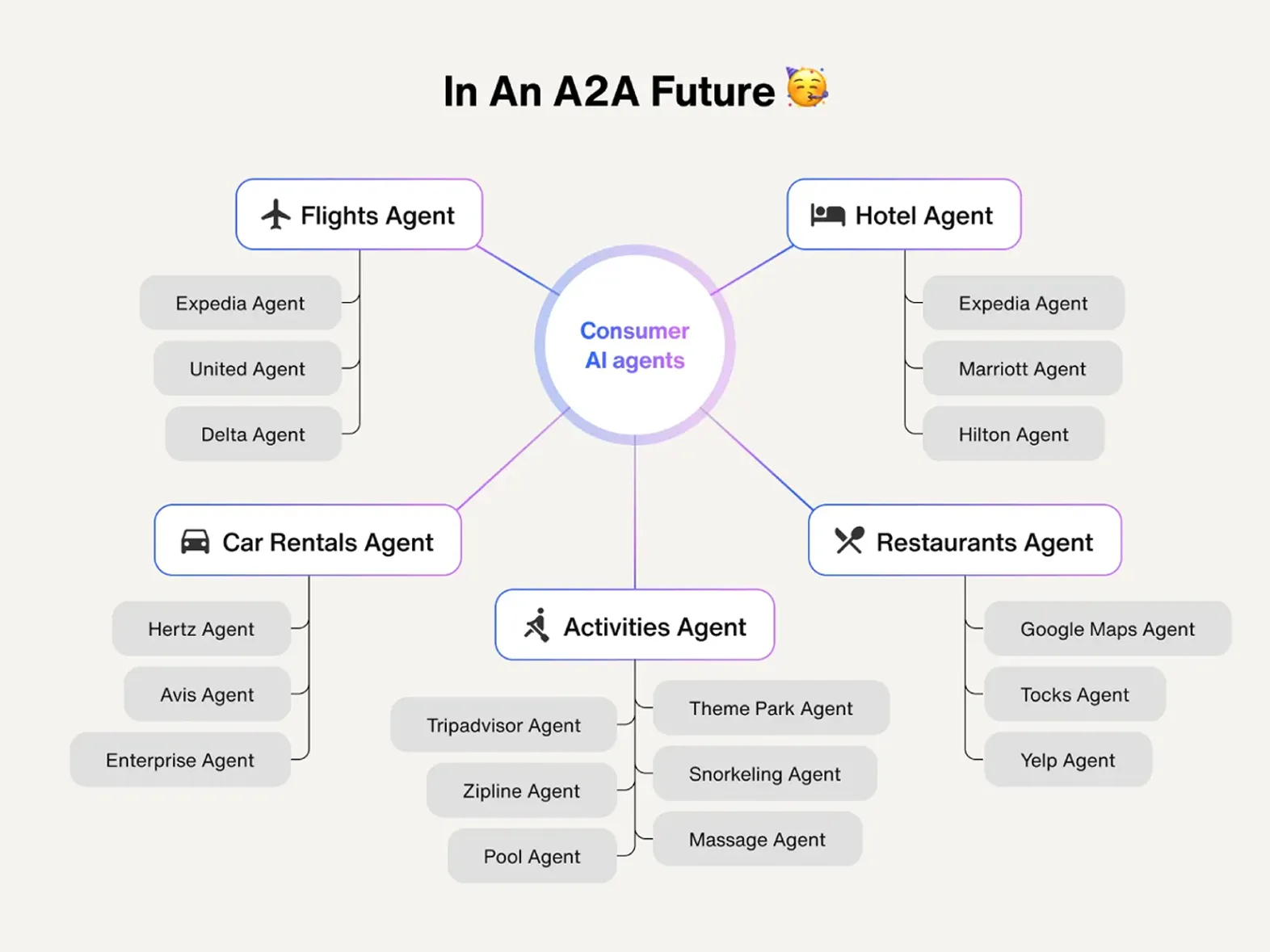
A shift is underway. You can see it in how people use tools, apps, and services. More and more, users are turning to agents to do the work for them. They are asking assistants to plan trips, organize work, find solutions, and carry out tasks. What was once a search or a series of clicks is now a request made to an agent.
This shift is the start of the agent economy. A new layer of interaction, where logic and decision-making are handled by autonomous software built on large language models.
And like every new layer of the internet before it, this one needs infrastructure.
What is the Agent Economy?
The agent economy is the emerging space where developers, startups, and creators are building LLM-powered tools that act on behalf of users. These agents don’t just return results. They plan. They choose. They execute.
We are seeing early signs of this shift:
- Travel agents that book end-to-end trips
- Research bots that synthesize and recommend
- Shopping advisors that evaluate and suggest
- Onboarding assistants that coordinate tasks
Each of these agents replaces steps the user once handled themselves. Now, software makes decisions based on user goals.
Why This Changes Everything
When users delegate intent to agents, it alters how products are found, used, and paid for. It changes the shape of discovery. It reshapes trust. It shifts control from platforms to software logic.
And that means the tools for distribution, monetization, and measurement have to change too.
This isn’t about inserting ads into chats. It’s about enabling agents to include structured, helpful options during their decision process. It’s about letting developers build with monetization in mind without sacrificing trust.
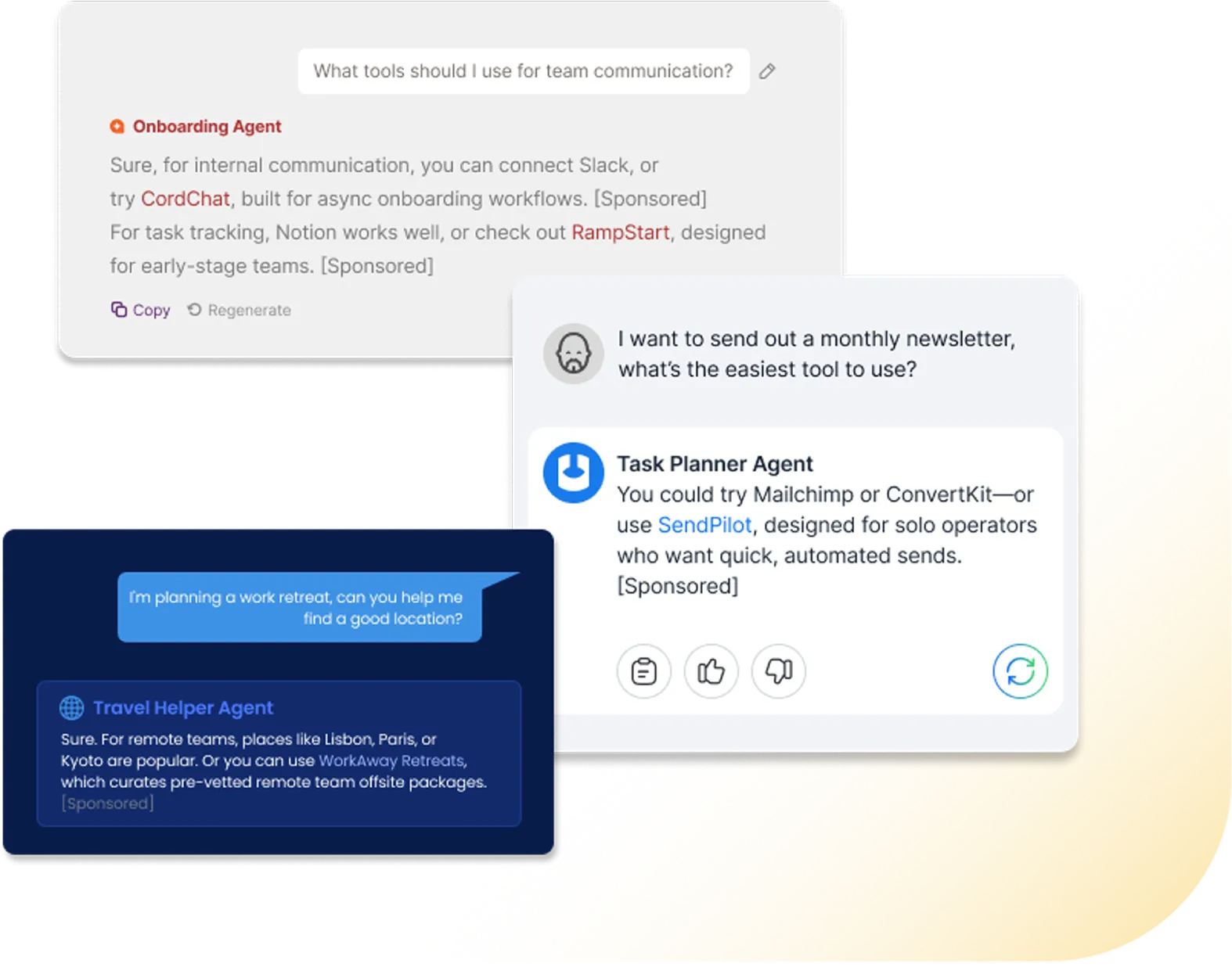
That’s the core of the agent economy: tools that are autonomous but accountable, helpful but fair, monetized but transparent.
What Developers Need
For developers, the agent economy opens new possibilities. You can now:
- Monetize based on agent-driven actions
- Deliver recommendations that align with real-time goals
- Participate in performance-based models without traditional ad mechanics
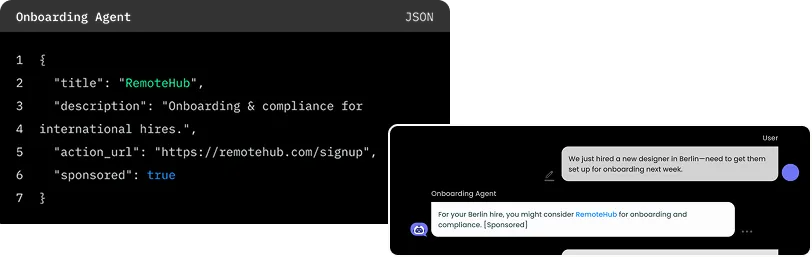
But it only works if the tools fit the agent experience. Agents aren’t pages. They aren’t timelines. They don’t scroll or refresh. They think. They plan. They suggest.
Developers need infrastructure that respects that logic. Lightweight. Programmable. Optional. And aligned with how users want to interact.
What Businesses Should Know
If you have a product and want it to be discoverable in this new world, you need to think differently. You are not optimizing for search results. You are optimizing for agent behavior.
That means defining when your product makes sense. Being able to describe it clearly. And making it easy for agents to surface your offer when it fits.
This is not about bidding for attention, it’s about being the right choice at the right moment.
A Better Way to Interact
We built our system to support this kind of economy. One where offers are not interruptions, but options. Where agents include a suggestion because it helps the user. And where developers are rewarded when those suggestions work.
This is what the next layer of the internet looks like. It’s built on agents, it’s driven by intent, and it needs a new kind of economy to thrive.
That’s what AgentVine is here to build and support.