

For the last two decades, product discovery online has been shaped by one dominant model: search. If you wanted users to find your business, you optimized your website, bought keywords, and hoped to land near the top of the results.
But things are changing. Fast.
Users are shifting away from typing questions into a search box. More and more, they’re asking AI agents to do the work for them. Instead of comparing ten tabs, they ask a planning assistant for a recommendation. Instead of sifting through reviews, they let a hiring agent pick a tool for onboarding.
This shift is forcing a rethink of how discovery works. If you’re optimizing for Google, you’re optimizing for a user reading links. But if the user is relying on an agent, the logic of discovery is now happening inside the model, not on the screen.
But there’s a problem. There is no economic layer for these agents. No way to fund their development at scale. No standard method for monetization. And no way for advertisers to participate in this new space responsibly.
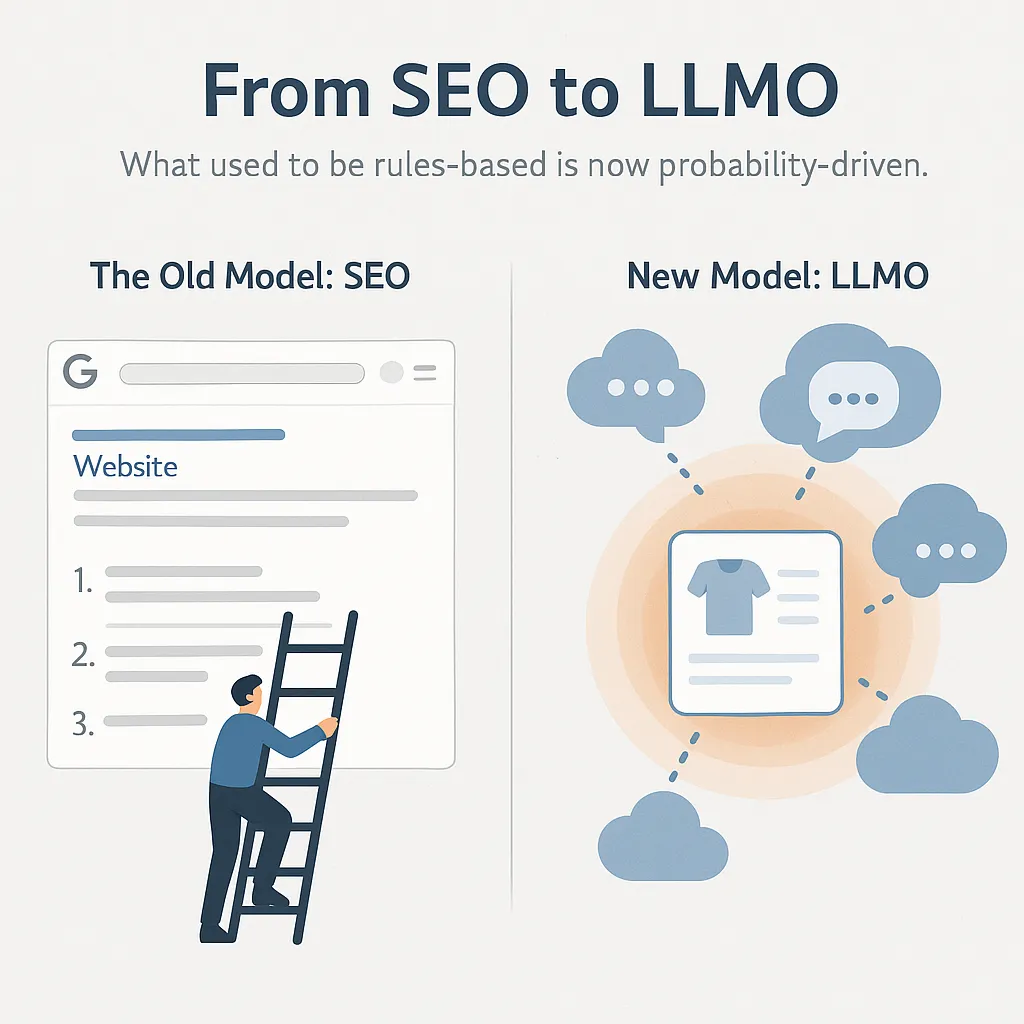
From SEO to LLMO
The old model was SEO. The new one is what many are calling LLMO: Large Language Model Optimization. The idea is to make your product easy for agents to discover, understand, and suggest.
But there’s a catch. LLMO isn’t deterministic. It’s probabilistic. You can try to show up in training data or structure your site in a way models can crawl and retain. But there are no guarantees. You don’t control how a model ranks or recalls you. And you can’t pay to secure a spot.
That’s where our approach comes in.
Structured Discovery Through Offer Units
We created Offer Units to solve this problem. If you want to be part of the agent-driven economy, you need a way to participate directly in the agent’s reasoning. Offer Units give you that access.
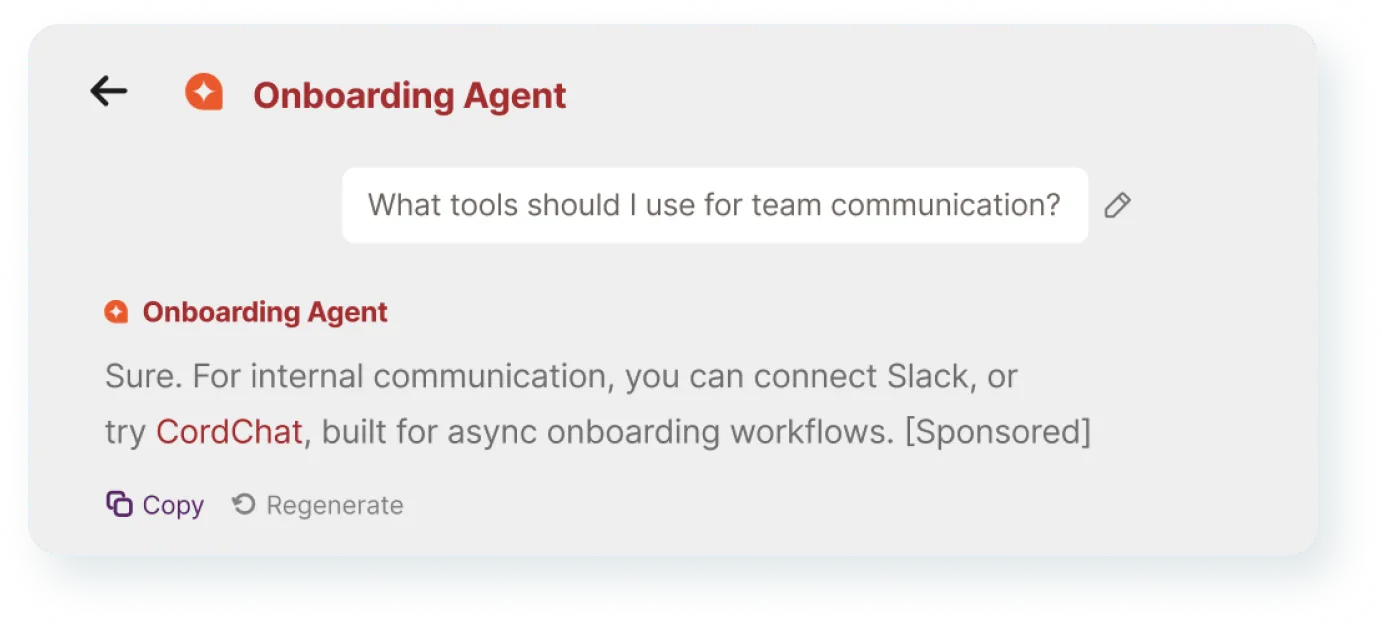
These are structured suggestions that agents can evaluate and include when helping users make decisions. You define your product, the kind of user intent it fits, and how you want it presented. You choose a payout model. And when a user’s goal matches your intent, your offer can be surfaced.
You’re not waiting to be guessed by the model. You’re giving the agent a real option.
What This Means for Brands
Brands can’t rely on being “findable” in a world where the user never sees a search result. Agents are becoming the new interface. If your product isn’t in their decision tree, it might as well not exist.
The good news is that this change levels the field. You don’t need to outrank huge competitors on Google. You just need to be relevant to the user’s intent. With Offer Units, you can target that intent directly.
This is not just about visibility. It’s about fit. If your product is the right solution for the job, you should have a way to show up. The agent can decide whether to include it, and the user can decide whether to act.
The Role of Trust
All of this only works if trust is maintained. That’s why every Offer Unit is structured, labeled, and optional. Agents are never forced to promote anything. They consider options based on alignment with the user’s goals. And users are always informed when something is sponsored.
We believe this is the only way forward. Product discovery has to stay useful. It has to be aligned with user needs. And it has to give developers and advertisers a path to contribute without undermining the experience.
What You Can Do Now
If you’re a brand or product owner, start thinking about how your offer fits into agent workflows:
- What user intents do you solve?
- When is the right time for someone to hear about your product?
- How should it be phrased to feel natural and helpful?
You can start testing these ideas now with Offer Units. Define your first intent. Set your payout model. And place your product where users are already making decisions.
The web as we know it was built around pages and clicks.
The next one is being built around agents and choices. Make sure your product has a place in that new agentic web world.